
Review status: This lesson is not presented as reviewed, approved, or endorsed by Shawna. Educational review status is managed separately and shown in The Color Corner library when established.
Balayage and hand-painted soft dimension
Signature painting patterns, saturation control, and blend zones for lived-in color that feels effortless and stays soft at the grow-out line.
- Time
- 32 min
- Level
- Intermediate
- Context
- The Color Corner
- Review date
- July 2026
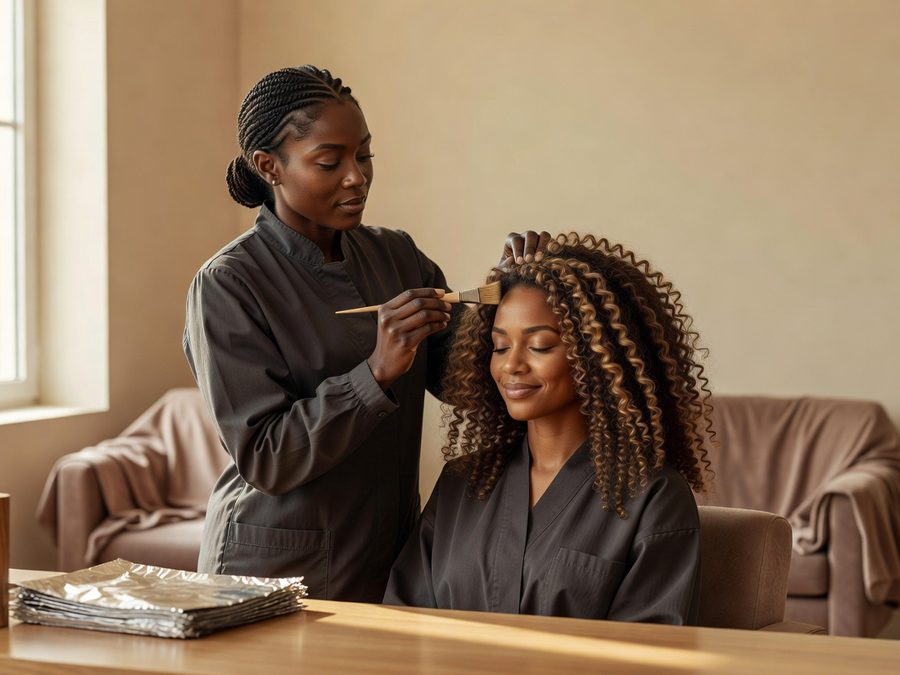
Lesson visual inside Color Me with Shawna
What you will learn
- Choose between open-air and foil-supported painting based on lift needed and hair history — not habit
- Control saturation to create soft blend zones rather than hard lines that show in four weeks
- Place brightness where grow-out remains flattering for eight to twelve weeks down, not just day one
- Finish with zone toning that maintains dimension instead of collapsing it with global application
Materials
- Balayage board or foil as backing — decision based on lift requirements, not what is in your drawer
- Brushes with different bristle density to control product deposit without changing product
- Cotton strips for isolation at transition zones you already mapped
- Clip system that keeps clean sections accessible and mapped for your assistant
- Spray bottle for controlled dampening on high porosity areas — resistance plus acceleration awareness
Safety note — preserved
Professional technique lesson with integrity checks throughout every step. Always evaluate history and elasticity and follow manufacturer guidance for any product used. Open-air processing requires additional ventilation awareness. Zones that feel different are treated as different — do not average them.
Step-by-step — The Color Corner · Color Me with Shawna
Sectioning determines where dimension lives when worn down — not where foils look neat
Before opening any product, map where you want lightness to fall when hair is worn down naturally — not sectioned, not stretched, down the way the client actually wears it. For most clients, that means brightness framing the face where light hits, soft ribbons through the interior that peek when hair moves, and deeper pockets holding in the underlayer near the nape so grow-out feels intentional. Shawna places bright points higher around the face and lower through the back for natural growth behavior that stretches appointment spacing. Sketch this on paper or in your notes. Teach your assistant what each section is for so they keep your map intact while you work and so they learn why, not just where. Why this matters: The most photographed balayage is not the one with the cleanest foil pattern on Instagram. It is the one that still reads as soft dimension at week nine. Design for week nine, then work backward to today. Shawna's note: Place a mirror across the room where you can see the back of the head falling naturally while you work. That secondary view keeps you honest about where dimension actually lives down.
Saturation control is where softness comes from — density of brush, pressure of hand
Two strands can have the same target level and profoundly different softness based on how you applied, not what you applied. Heavy saturation through mids with feathered ends gives bold but still blended. Light feathered high with stronger low gives sun-kissed. Practice on a mannequin with two brushes of different bristle density using the same product. Notice how bristle density changes deposit before you adjust technique. Then keep product constant and vary only pressure. Shawna often paints high at the root zone with almost no pressure — whisper, not push — then increases pressure as she moves lower to create that soft waterfall from deeper root to brightness at bottom. This is not trick. It is craft decision repeated thousands of times until automatic. Beth Minardi taught that painting is drawing with light, not coloring inside lines. Why this matters: Softness is not about starting lower. It is about feather direction and saturation control through the transition zone, repeated consistently. Shawna's note: Her signature habit after first pass is second whisper — same section painted twice very lightly specifically in transition. That erased the last hint of hard line first pass left. Small habit, lifelong difference.
Blend zones, not lines — think in three inches, not one point
The most common frustration clients report with grown-out balayage is a hard line where painting started — a shelf where deep meets light with no conversation between. Prevent it by thinking transition over three inches, not a single starting point. Above transition, hair remains deeper and more opaque. Through transition, coverage becomes translucent and feathered, almost missed. Below it, saturation is full enough to lift predictably in this hair, not generically. Use your brush to feather upward into deeper zone, not downward away from it. Direction matters more than starting height — upward feather creates soft diffusion, downward feather creates a line you spent time blending out. If you feel tension as you feather upward, lighten hand or soften product area immediately. Tension tells you that zone is approaching over-saturation or porosity shift. Why this matters: Hard lines come from where you stopped mixing deep and light, not where you started light. Extend the conversation between deep and light over a longer vertical space and you extend the wearable life of the color by weeks. Shawna's note: Document transition height with a quick photo in consistent light with consent. Transition height today is transition nostalgia next appointment — what you loved so you can repeat it.
Process monitoring adjusts for porosity history, not just time on a clock
Open-air lightening behaves differently on porous mids with previous color versus healthy new growth — resistance initially then acceleration without warning. Check sections by gently lifting with gloved finger, never pulling foil to peer. Look for underlying pigment phase shifting — what warmth is revealing itself and at what intensity? Feel for dryness that signals approaching rinse point long before visual timing does. High porosity areas may need cotton placed at transition or reserved and re-applied at lower saturation later to avoid over-processing one zone while waiting for another to catch up. Document which zones were fast. That information belongs in client record permanently as invaluable: fast zones today are fast zones forever. Great balayage is not fast work hurried well. It is deliberate work with assessment built in so speed is safe. Why this matters: Two clients with same target can have 20-minute difference in processing per zone because history lives in porosity, and porosity determines timing more than product choice. Shawna's note: If a section feels significantly different than the one next to it when touched, treat them as different heads with different timing, even if they are two inches apart.
Toning that honors what you painted rather than erasing careful placement
Global toning can erase carefully placed dimension in one application — a lesson most of us learn once and remember forever because it hurts. Zone your toning with the same intention as your placement. Deeper areas may benefit from slightly deeper or more neutral tone to add depth and keep root intentional. Brighter areas may need specific tonal family to prevent warmth feeling brassy rather than sun-kissed — and that decision depends on level achieved in that zone, not overall intention. Ends may need porosity-aware formulation because porous ends grab differently than new growth. Apply in same order as your placement so you can monitor dimension developing, not just overall tone. Rinse when dimension remains visible, not when timer says to. Your eyes and this particular client's hair determine timing, not a defaults chart that does not know her history. After rinsing, style to show movement — that is where painted dimension is best seen and photographed with consent for your record. What separates great colorists from good ones here is not ability to paint brightness. It is ability to keep brightness at all different levels after toning, because you toned with same zone respect you painted with. Why this matters: Collapse of dimension at toning is the quietest way to lose the dimension you spent an hour placing. Zone tone or watch it disappear. Shawna's note: After rinsing, before you style, step back and look at hair down in secondary mirror. Does dimension still read when moving? That check takes ten seconds and tells you whether your toning preserved your mapping.
Key takeaways
- Design where dimension falls when hair is worn down in real life, not where sections sit when stretched for neat foil photos.
- Saturation control, brush density, and feather direction create softness more than starting height alone — practice varying one at a time.
- Monitor porosity differences during processing. Porous zones accelerate and need protection or reserved re-application, not equal treatment.
- Zone your toning to keep dimension visible rather than collapsing it with well-intentioned but global application. Toning is a second placement decision.
Professional note · Review status not established
Shawna's signature balayage habit is second whisper — painting same section twice with very light pressure after first pass, specifically in transition zone. She calls it insurance. It erased the last hint of hard line first pass left, softening the line between deep and bright into a conversation rather than a shelf. She learned it watching a senior painter in 1998 and kept it daily since. Small habits repeated over decades create the character of your work — find yours in this technique and practice until automatic. What separates great colorists from good ones in dimensional work is not ability to achieve bright. It is ability to achieve soft eight weeks later because blend zones were long, saturation control was intentional, and toning preserved what painting created. Keep your transition photos. They teach you what your hands did on your best days so you can repeat it on average days.