
Review status: This lesson is not presented as reviewed, approved, or endorsed by Shawna. Educational review status is managed separately and shown in The Color Corner library when established.
Controlled lightening: integrity first
Plan lift stages with precision, monitor elasticity in real time, and know exactly when to pause. Achieve bright, healthy blondes without compromising the hair.
- Time
- 35 min
- Level
- Advanced
- Context
- The Color Corner
- Review date
- July 2026
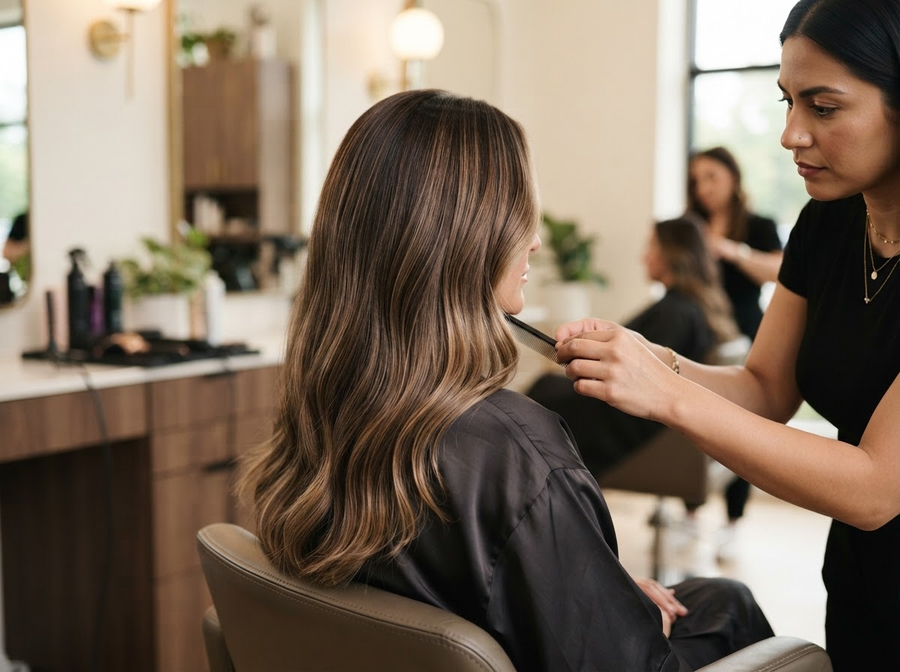
Lesson visual inside Color Me with Shawna
What you will learn
- Assess elasticity and porosity before deciding if lightening is appropriate today — not just what lift is possible
- Plan lift in zones with different approaches based on previous history, not one approach for the whole head
- Monitor during processing with real integrity checkpoints your hands confirm, not just your eyes
- Know precisely when to stop, rinse, and rebook rather than push — and frame that decision as professional care
Materials
- Strand test setup — four small sections minimum, labeled by zone
- Elasticity assessment guide with go/pause/refer thresholds you write before you assess
- Tail comb, foils, feathered placement board, and clips that keep sections clean
- Timer visible to both you and an assistant — no guessing
- Bond-support additive if you choose per manufacturer guidance, never as a replacement for judgment
Safety note — preserved
Advanced technique for verified professionals only. Always perform strand testing and always follow manufacturer timing, mixing, and safety protocols. Never proceed when integrity tests fail or scalp sensitivity is reported. This lesson covers planning and monitoring, not chemical formulas. When uncertain, consultation and second opinion come before product.
Step-by-step — The Color Corner · Color Me with Shawna
The decision to lighten is a decision about today, not about the final photo
You are deciding if this particular hair can accept lightening right now in its current state. That means checking new growth for virgin behavior, evaluating mid-lengths for previous lightening or color buildup with different response speeds, and assessing ends for density loss and elasticity change you can feel. Take a small wet strand from each zone. Stretch gently. If it snaps quickly or stretches and stays stretched without returning, document that and pause. No photograph is worth breakage you could have anticipated. Lisa Kelley's precision lives here — chemistry awareness without reckless confidence. Integrity first is not a slogan in this library, it is a chairside policy written before you mix. Why this matters: Blonde reputations are built on hair that is still healthy months after someone leaves your chair, not just how bright it looked under the ring light. Shawna's note: Test after a gentle cleanse that removes heavy product buildup so your results are about the hair, not the product sitting on top of it.
Zone planning prevents the band you spend an hour correcting later
Divide the head on paper before you place anything. Where is virgin growth that will behave predictably? Where is previously lightened but still warm mid-lengths with resistance? Where are ends that have been lightened twice before and need protection, not product? Each zone may need different saturation, placement density, or even a sequenced approach — lightening some zones today and others next time. Shawna sketches her zone map in her consultation notes with brief observations in plain language: new growth elastic, mids slightly draggy, ends thin but intact. It takes three minutes and saves forty-five minutes of corrective toning. This is especially critical on clients who have had at-home color, multiple previous technicians, or smoothing treatments that affect response. Sue Pemberton calls this mapping intellectual ownership — you decided on purpose, on paper, before your hands moved. Why this matters: Bands do not come from bad lightener. They come from one approach applied to three different histories. Map the histories. Shawna's note: Photograph your zone map with the client's consent and keep it in their record. That photo becomes your fast-zone reference next visit, and fast zones today are fast zones forever.
Place with intention and monitor with your hands, not just your eyes
Clean sections, consistent tension, thoughtful saturation — these create even lift and predictable processing that photographs well because it is sound underneath. Eyes see swelling and warmth patterns. Hands feel porosity changes, dryness appearing in real time, and loss of elasticity before breakage. Check your work every few minutes in a calm cadence, not panicked checking. Look at the foil line for color history revealing itself. Feel a test strand pulled from near the scalp where your eyes may miss sensitivity signals. Keep notes on which areas lifted first. Those are your fast zones next time, and they need less time or less product contact. Great blonding is often described as artistry. What you do not see in photos is the repeated assessment cycle that underpins that artistry. Why this matters: Monitoring is not fear. It is how experienced colorists keep their fast client turnaround possible — they know where to watch. Shawna's note: If you feel tension as you feather saturation upward, lighten your hand immediately. Tension tells you that zone is approaching over-saturation or that porosity is changing under your brush.
The rinse decision is the most professional moment in the service
Knowing when to stop lightening is more valuable than knowing how to start — every senior educator agrees on this, from Jack Martin to Beth Minardi. Signs it is time to rinse include: hair feeling gummy when gently tensioned wet, rapid lightening with simultaneous integrity change you can feel, client reporting unusual burning or discomfort after you have checked placement for contact, or you have reached your pre-determined time limit based on strand testing — not your hope. Rinse thoroughly with good water pressure. Assess under that pressure, not under foil. Document what you see including zones that behaved differently than predicted. It is always better to book a second session than to explain breakage. What separates great colorists from good ones is not higher lift levels. It is willingness to be the person who says: we are stopping here today because your hair is telling me to. That is not limitation. That is 34 years speaking through you. Why this matters: Bravery in blonding is not pushing further. It is rinsing sooner and educating better.
Toning and aftercare planning is where the blonde becomes wearable for real life
Toning is not an afterthought — it is a second professional decision after you have observed what lightening actually revealed, not what you hoped it would reveal. Consider remaining warmth by zone, porosity differences between new growth and mids that affect deposit, and maintenance reality — does this client come every 4 weeks or every 10? Use consultation language like: we lifted beautifully to a level 9 in most zones. I am seeing some residual warmth in the mid-lengths we can refine today and continue to improve between visits with this specific at-home care you are already using. Then recommend only what this particular client needs given her existing routine, not a cart of products. Specificity builds trust. Tracey Cunningham's most natural blondes are not natural because they lack warmth — they have depth and honesty about warmth. Why this matters: Global toning can erase carefully placed dimension. Zone your toning the way you zoned your lightening — same intention, same zones, same respect for history. Shawna's note: Apply toning in the same order as your placement so you can monitor dimension as it develops. Rinse when dimension remains visible, not when a timer tells you to. Your eyes and this client's hair determine timing, not a defaults chart.
Key takeaways
- Elasticity testing per zone before you mix product is non-negotiable. Document and act on what you feel, not what you hope.
- Zone planning on paper prevents most bands and uneven results and saves you 45 minutes of corrective toning.
- Monitor with hands and eyes together on a calm cadence. Fast zones today are fast zones permanently — record them.
- The ability to stop, rinse, and rebook is a mark of experience and care, not limitation. Practice saying it out loud before you need it.
Professional note · Review status not established
Shawna has never once regretted pausing a lightening service. She has regretted pushing — twice — and she remembers both clients' names thirty years later. What separates great colorists from good ones in blonding is not formula secrecy or speed. It is restraint paired with documentation. Good blondes happen because of what you refused to do as much as what you did. Your reputation is built on hair that remains healthy months after someone leaves your chair, and on clients who trust you to say we are stopping here today because that is what your hair needs. Keep your zone maps. Re-read your strand test notes. That accumulated observation is your real expertise, more valuable than any single product.